Strait of Hormuz Crisis: How US-Iran Tensions Impact Bitcoin and Oil Prices
The Strait of Hormuz is more than just a narrow strip of water; it's a critical artery for the global economy. When tensions flare up in this region, particularly between the United States and Iran, the shockwaves are felt across international markets. For investors, the key question is how these geopolitical tremors affect their portfolios, from traditional commodities like oil to digital assets like Bitcoin. This article dives into the intricate relationship between a crisis in Iran's Strait of Hormuz involving the US Navy under Trump, and the subsequent movements in Bitcoin and oil prices.
The Strait of Hormuz: A Global Economic Chokepoint

The Strait of Hormuz, connecting the Persian Gulf with the Gulf of Oman, is the world's most important oil chokepoint. A significant portion of the world's seaborne oil passes through it daily, making its stability crucial for global energy security.
Throughout history, this strategic waterway has been a flashpoint for conflict. The Iran-Iraq War in the 1980s saw the "Tanker War," where both nations targeted oil tankers. More recently, the Trump administration's "maximum pressure" campaign against Iran, which included withdrawing from the 2015 nuclear deal and imposing heavy sanctions, led to a series of confrontations in and around the strait. These included attacks on oil tankers and the downing of a U.S. drone by Iran.
Oil and Bitcoin: An Indirect Dance

The connection between oil and Bitcoin prices is not always straightforward. A crisis in the Strait of Hormuz that threatens oil supply will almost certainly cause crude prices to spike. However, the impact on Bitcoin is more indirect and complex.
The primary channel through which oil prices affect Bitcoin is through inflation and monetary policy. Here’s how it typically plays out:
- Rising Oil Prices: A surge in oil prices can lead to higher inflation as energy and transportation costs increase.
- Central Bank Response: To combat inflation, central banks may raise interest rates or delay planned rate cuts.
- Impact on Risk Assets: Tighter monetary policy and higher interest rates tend to strengthen the dollar and make safer, interest-bearing assets more attractive. This can pull capital away from riskier assets like tech stocks and cryptocurrencies, putting downward pressure on Bitcoin's price.
Conversely, a de-escalation of tensions that leads to falling oil prices can create a more favorable environment for risk assets, including Bitcoin.
Bitcoin: Digital Gold or Risk-On Asset?

The debate over whether Bitcoin is a "digital gold" safe haven or just another risk-on asset intensifies during geopolitical crises.
The "digital gold" narrative suggests that Bitcoin, with its decentralized nature and fixed supply, should act as a store of value when there is turmoil in the traditional financial and political systems. There is some evidence to support this, as geopolitical instability can sometimes lead to increased demand for assets outside of government control.
However, in the short term, Bitcoin often trades like a high-risk tech stock. During sudden geopolitical shocks, there's often a broad market sell-off as investors flee to the perceived safety of cash and government bonds. In these moments, Bitcoin's price has been shown to drop alongside traditional markets.
A Case Study: The 2026 Strait of Hormuz Standoff
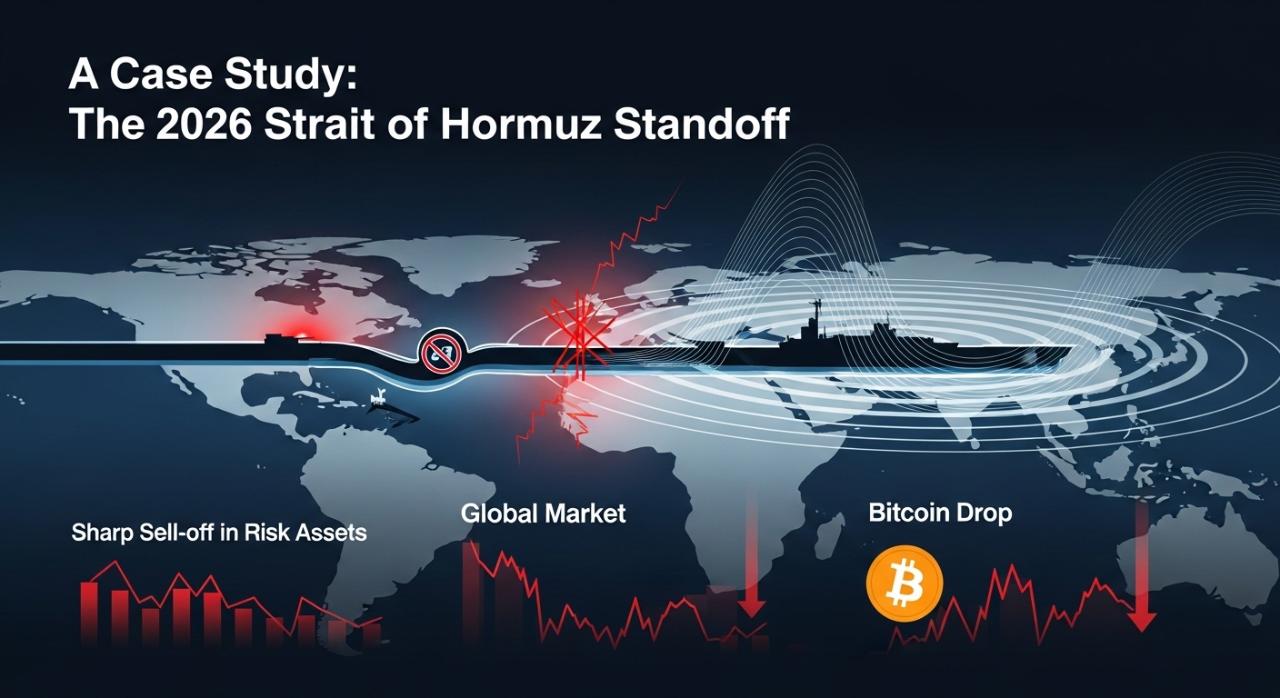
Recent events have provided a clear example of this dynamic. Following a period of heightened tensions, a hypothetical closure of the Strait of Hormuz by Iran in early 2026, met with a US Navy blockade ordered by President Trump, sent ripples through global markets.
Initially, the news triggered a sharp sell-off in risk assets. Bitcoin's price fell significantly as traders reacted to the potential for a prolonged energy crisis and its inflationary consequences. This immediate reaction reinforced the view of Bitcoin as a risk-on asset.
However, as the crisis unfolded, a more nuanced picture emerged. While oil prices remained elevated due to the blockade, Bitcoin's price stabilized and began to recover, outperforming equities. This resilience was attributed to a growing number of investors viewing Bitcoin as an alternative financial system, especially as the crisis highlighted the vulnerabilities of traditional trade and finance.
Ultimately, when diplomatic efforts led to the reopening of the strait, oil prices fell sharply, and Bitcoin's price surged, breaking through previous resistance levels. This demonstrated that while Bitcoin is not immune to initial panic selling, it can also benefit significantly from the resolution of geopolitical conflicts.
Conclusion
The relationship between a crisis in Iran's Strait of Hormuz involving the US Navy and the Trump administration, and the resulting movements in Bitcoin and oil prices is multifaceted. While the impact on oil is direct and predictable, Bitcoin's reaction is more complex.
Here are the key takeaways for investors:
- Short-Term Volatility: Expect Bitcoin to react like a risk-on asset during the initial phases of a geopolitical crisis, often selling off with the broader market.
- Long-Term Potential: The "digital gold" narrative is tested during these events, and Bitcoin's ability to recover and even thrive in the aftermath suggests a growing recognition of its unique properties as a decentralized asset.
- Macro Awareness is Key: Understanding the indirect connections between energy markets, inflation, and monetary policy is crucial for navigating the crypto markets during times of geopolitical stress.
For those invested in digital assets, staying informed about geopolitical developments is no longer optional. The Strait of Hormuz remains a critical flashpoint, and its future stability will undoubtedly continue to influence both the old world of oil and the new world of Bitcoin.